In short
- The Abbey is the only paid sight on the Mont: €13 from 1 October 2026 to 31 March 2027; €16 was the 2026 high-season price (1 April–30 September 2026), and 2027 summer prices were not yet published as of November 2026. Free for under-18s and for 18–25s who are EU nationals or non-EU regular residents of France. See Abbey tickets.
- Open daily except 1 January, 1 May and 25 December: 9:00 AM–7:00 PM (local time) from May to August, 9:30 AM–6:00 PM the rest of the year, last entry one hour before closing.
- Allow 45–60 minutes to walk up from the car parks and 1–1½ hours inside; the route has hundreds of steps and no lift.
- No suitcases or large bags, no pets (assistance dogs excepted) and nowhere to leave luggage at the monument.
Why the Abbey is the heart of the visit
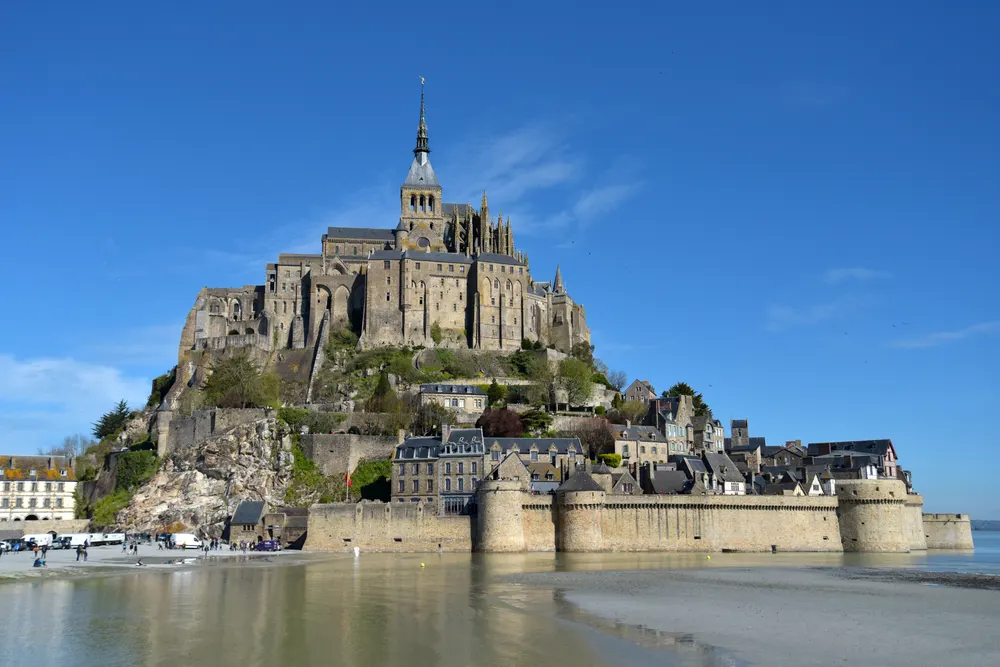
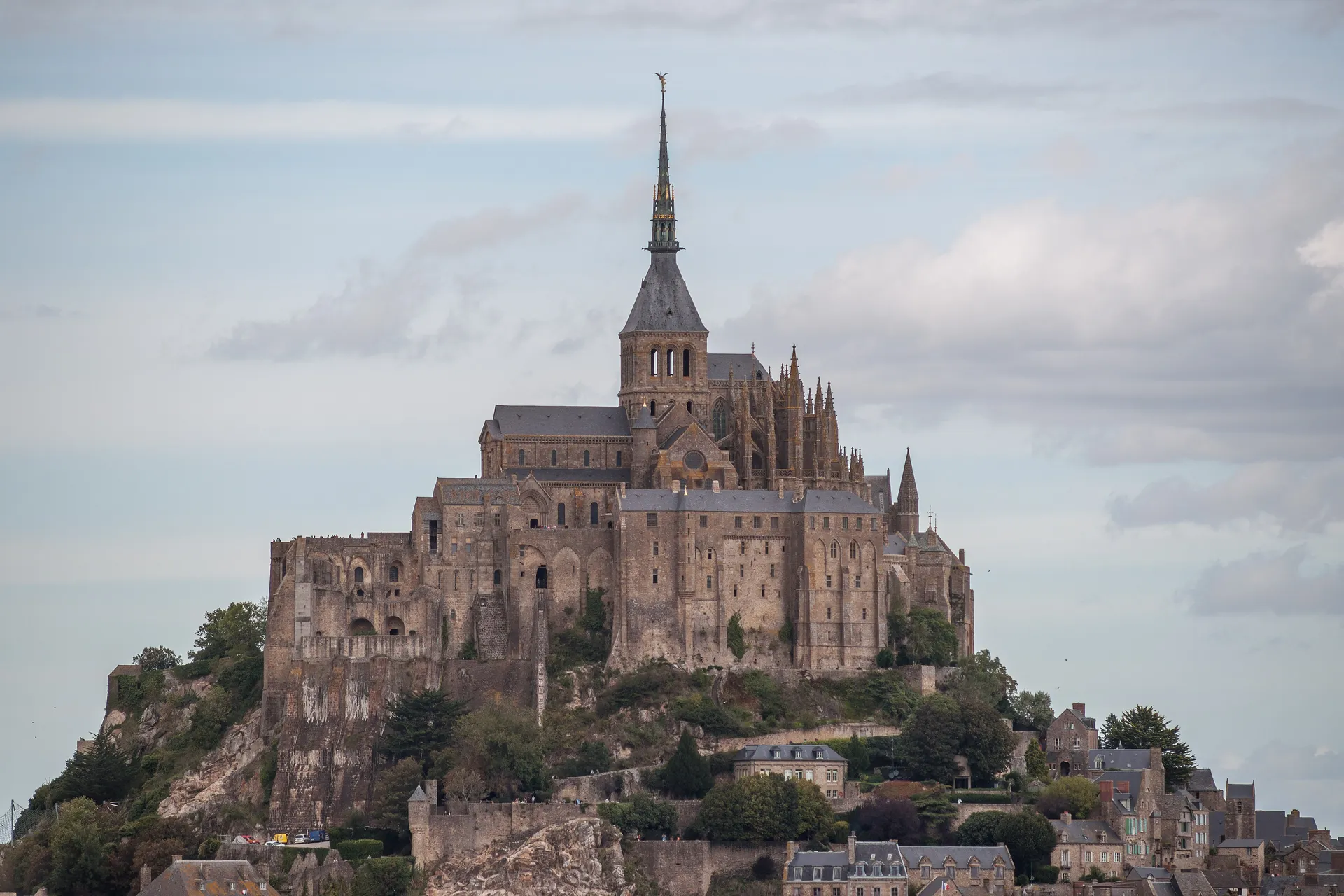
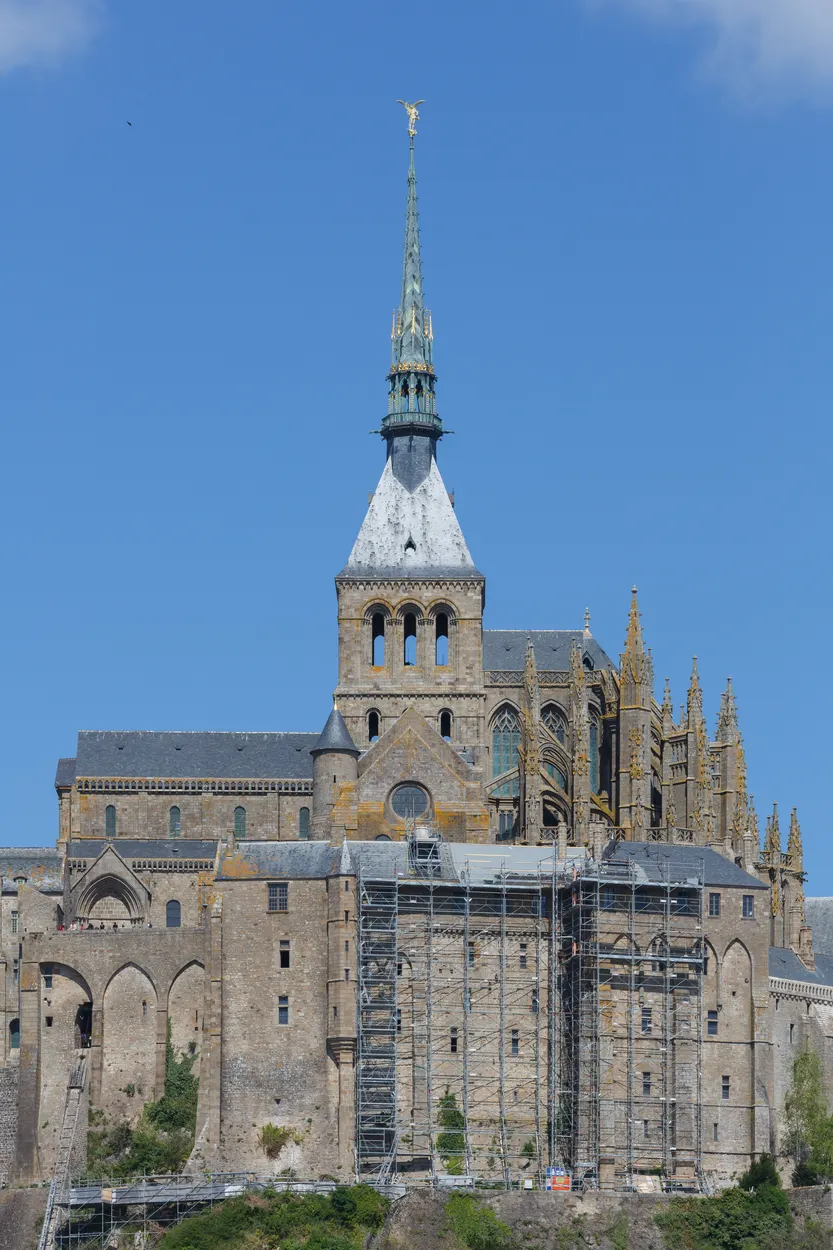
Everything on Mont-Saint-Michel climbs towards the Abbey. The village, the ramparts and the Grande Rue are free and open day and night, but the monument at the summit is what most people travel across France to see: a Romanesque church on a granite peak, a 13th-century Gothic monastery called La Merveille ("the Marvel") stacked three storeys high against the north cliff, and terraces that look out over one of the largest tidal bays in Europe.
The Abbey belongs to the French state and is run by the Centre des monuments nationaux (CMN). It is still a place of worship: a small community of the Monastic Fraternities of Jerusalem, about a dozen monks and nuns, has lived here since 2001 and holds services in the abbey church. The rest of the building is a museum-monument with a fixed one-way route.
If you only have a few hours on the Mont, give the Abbey priority and come early or late in the day. If you have longer, combine it with the ramparts and village, a guided walk on the sands (bay walks) and a high tide (tide times).
- Opening hours
- 1 May–31 Aug: 9:00 AM–7:00 PM · 1 Sep–30 Apr: 9:30 AM–6:00 PM
- Last entry
- 1 hour before closing
- Closed
- 1 January, 1 May, 25 December
- Adult ticket
- €13 (1 Oct 2026–31 Mar 2027) · €16 (high season 1 Apr–30 Sep 2026; 2027 prices not yet published)
- Time inside
- 45 min to 1 h 30 (self-guided)
- Operator
- Centre des monuments nationaux
Why the Abbey of Mont-Saint-Michel is important
The Abbey matters for several reasons at once – religious, architectural, intellectual and national – and few places in Europe combine them so completely.
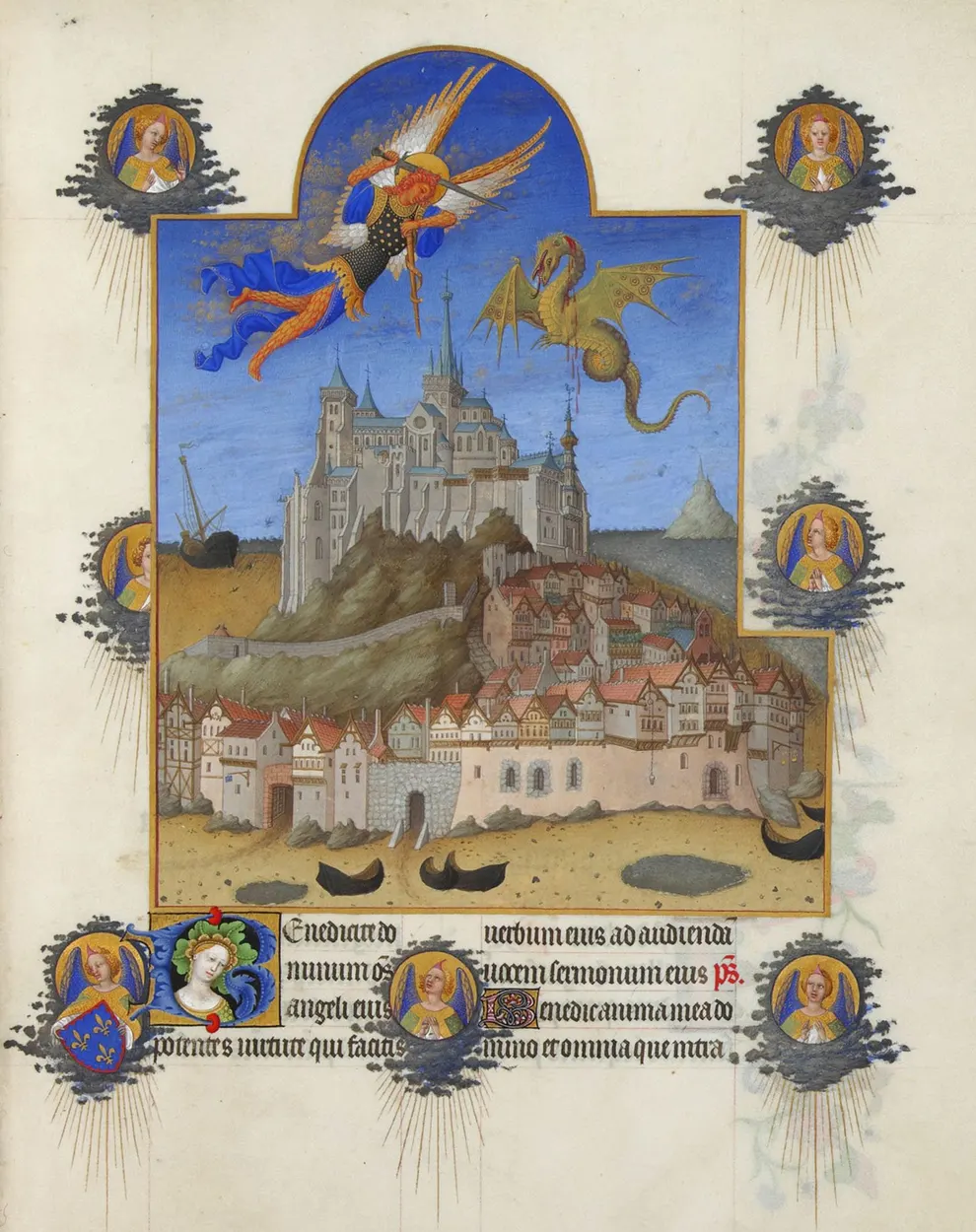
- A pilgrimage site for more than 1,300 years. By tradition the story begins in 708, when the archangel Michael appeared to Bishop Aubert of Avranches. For centuries pilgrims crossed the sands to the rock, which became one of the great Saint Michael sanctuaries of Christian Europe.
- A Benedictine abbey from 966. Duke Richard I of Normandy installed Benedictine monks that year. The abbey church was begun in 1023, and in the early 13th century the monks built La Merveille, the Gothic monastery on the north face – one building that shows Romanesque and Gothic architecture side by side.
- A centre of learning. The monks copied and illuminated manuscripts here; the surviving ones are kept in Avranches, at the Scriptorial museum.
- A fortress that never fell. During the Hundred Years' War the Mont held out against an English siege from 1423 to 1434, while the rest of Normandy was in English hands – which made it a symbol of French resistance.
- Prison, then monument. After the Revolution the monks were expelled and the abbey served as a prison until 1863. It was classified a Historic Monument in 1874 and restored, and in 1979 UNESCO inscribed Mont-Saint-Michel and its Bay on the World Heritage List.
It is also still alive: a small Benedictine community returned in 1969, and since 2001 the Monastic Fraternities of Jerusalem have prayed in the abbey church. With 1,627,042 visitors in 2025, it was France's second most-visited national monument, after the Arc de Triomphe. More in our history of Mont-Saint-Michel.
Getting up to the Abbey gate
Cars stop on the mainland. From the visitor car parks you either ride the free Le Passeur shuttle to a stop about 400 m from the village gate or walk across the 2014 bridge; then you enter the walls by the Porte de l'Avancée and climb. The official estimate for the whole journey from the car parks to the Abbey is 45 minutes to an hour, depending on crowds. Details are in getting there and practical info.
There are two ways up inside the walls. The Grande Rue is the main street, lined with shops and restaurants and very slow at midday in summer. The ramparts walk starts just inside the gate on the right and runs along the walls to the same upper streets: it is quieter, has the best views of the bay and rejoins the route below the Abbey steps. Either way, the last stretch is the Grand Degré, a long stone staircase up to the ticket office and the entrance.
In practice the climb is the hardest part of the visit for many people. Count on several hundred steps between the village gate and the top of the Abbey route, with uneven granite underfoot. The CMN describes the site as very difficult for people with reduced mobility; read the accessibility notes in practical info before you go.
The route, room by room
The visit follows a set route from the top of the Abbey down through three levels. The free visitor leaflet, available at the entrance in 13 languages, has a plan. These are the spaces you pass through, in order:
- Guard Room (Salle des Gardes) – the fortified gatehouse where pilgrims were once received; the ticket desk and security check are here.
- Grand Degré – the steep staircase between the abbey church and the abbots' lodgings, climbing to the Saut-Gautier terrace.
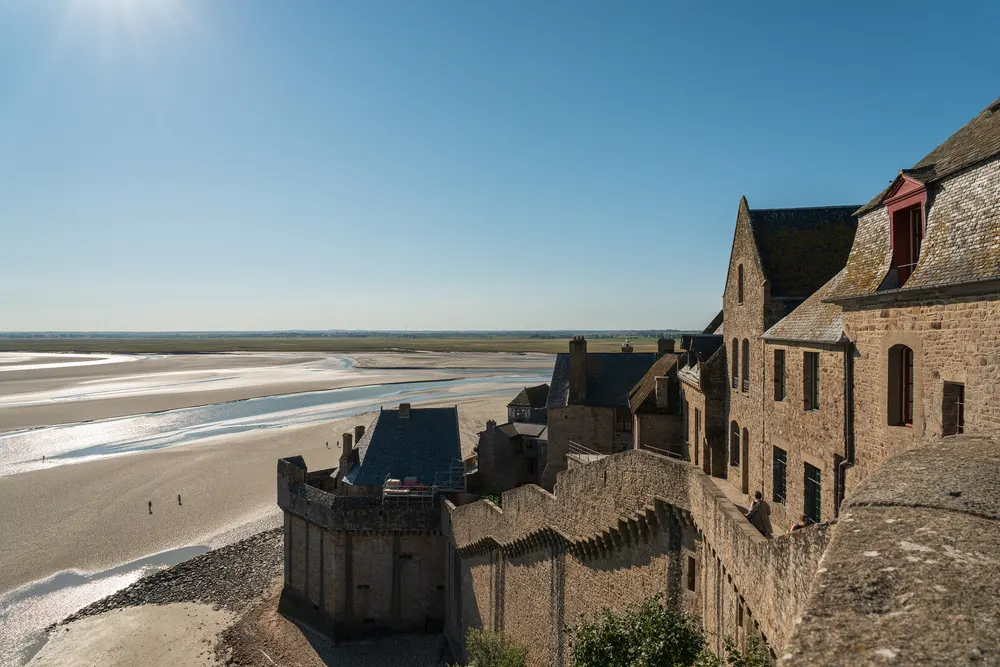
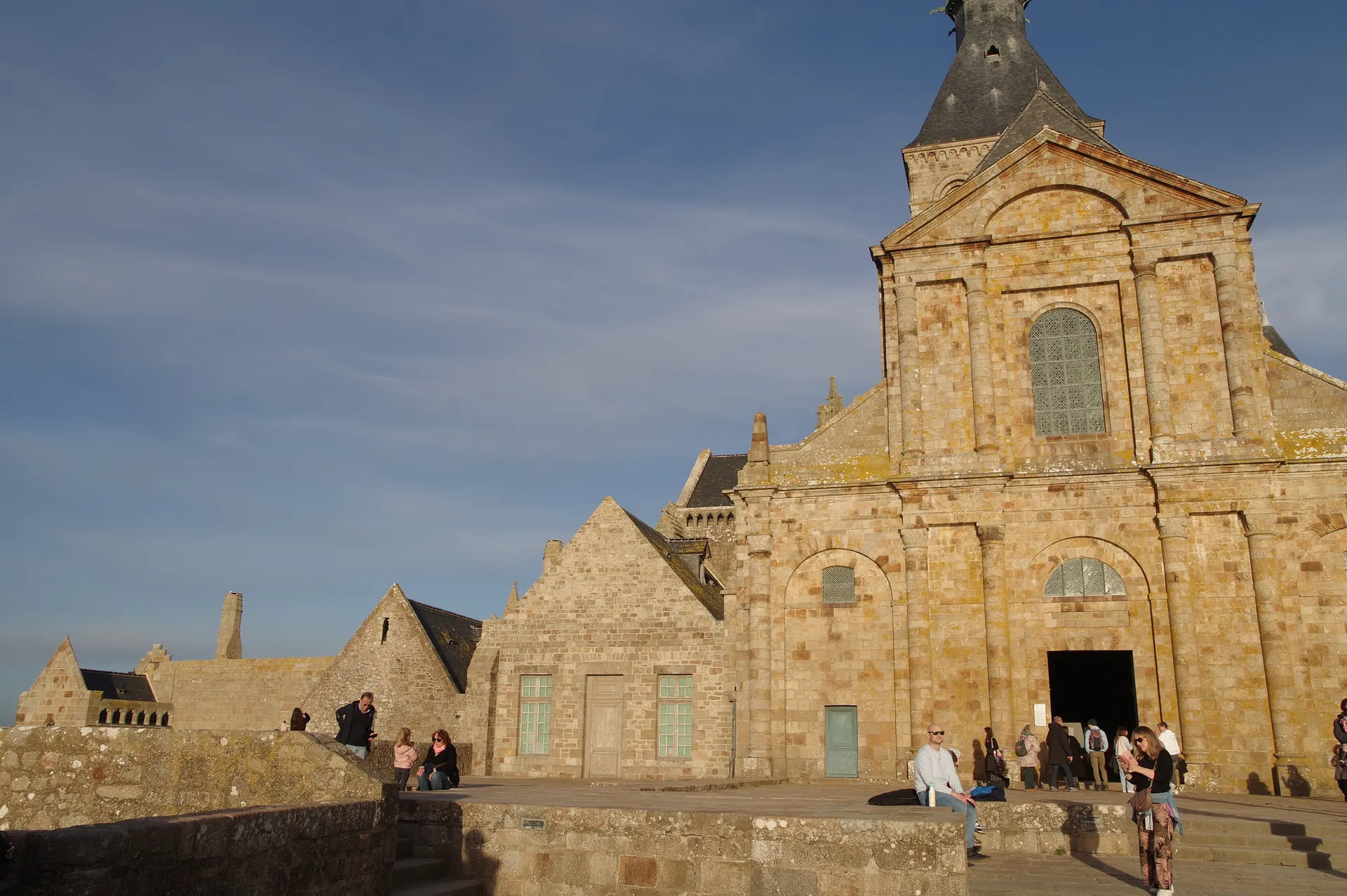
- West Terrace – the former forecourt of the church, with the widest view in Normandy: the bay, Tombelaine, the Brittany coast and, on clear days, the Chausey islands. The church's classical façade dates from 1784.
- Abbey church – begun in 1023 and built on the summit of the rock over crypts. The nave is Romanesque; the choir collapsed in 1421 and was rebuilt in Flamboyant Gothic, so you walk from round arches into soaring glass.
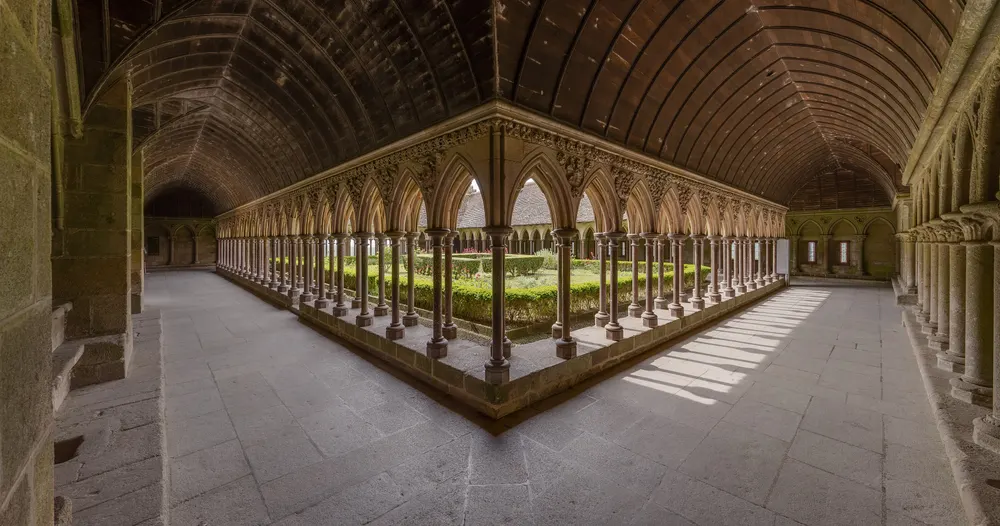
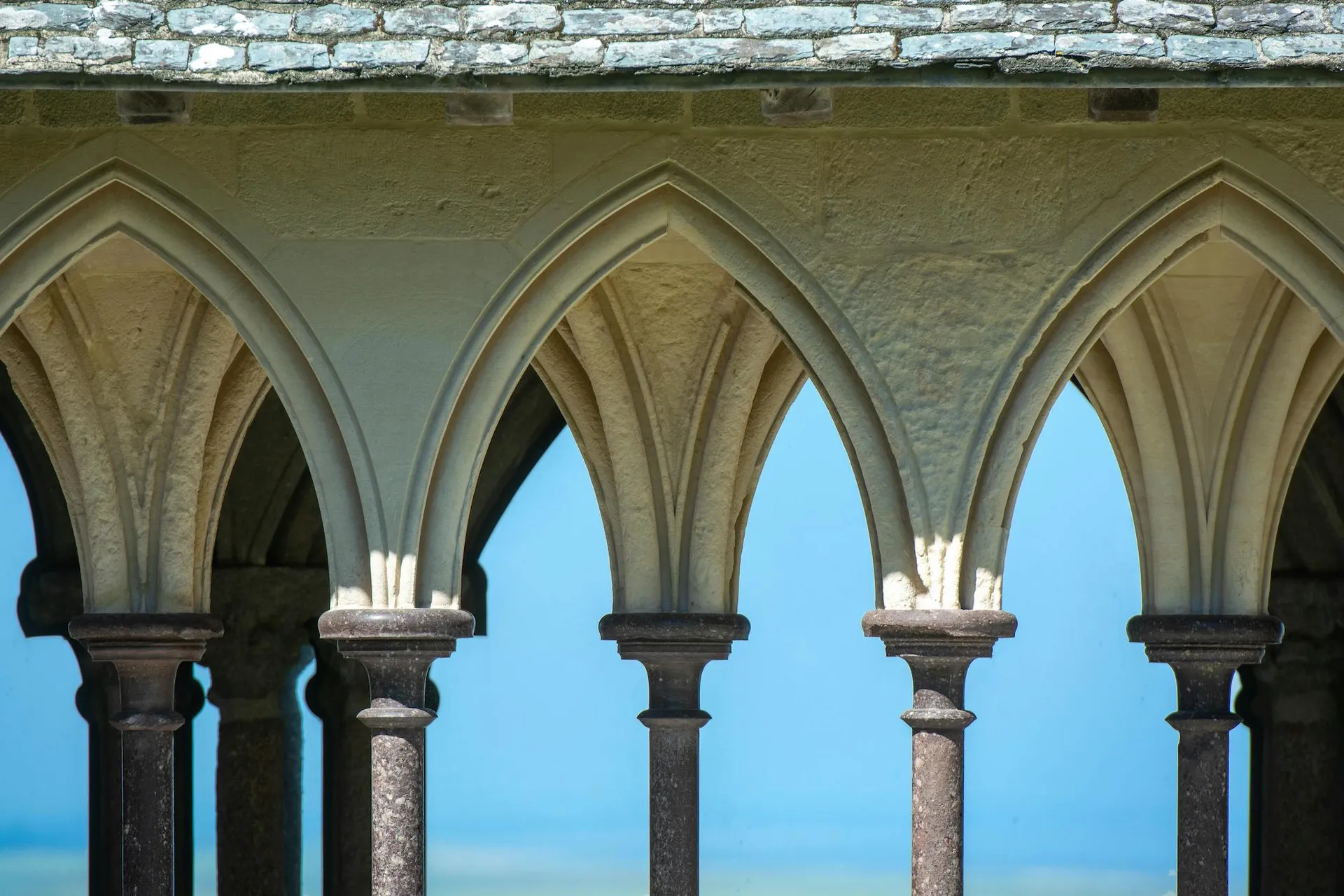
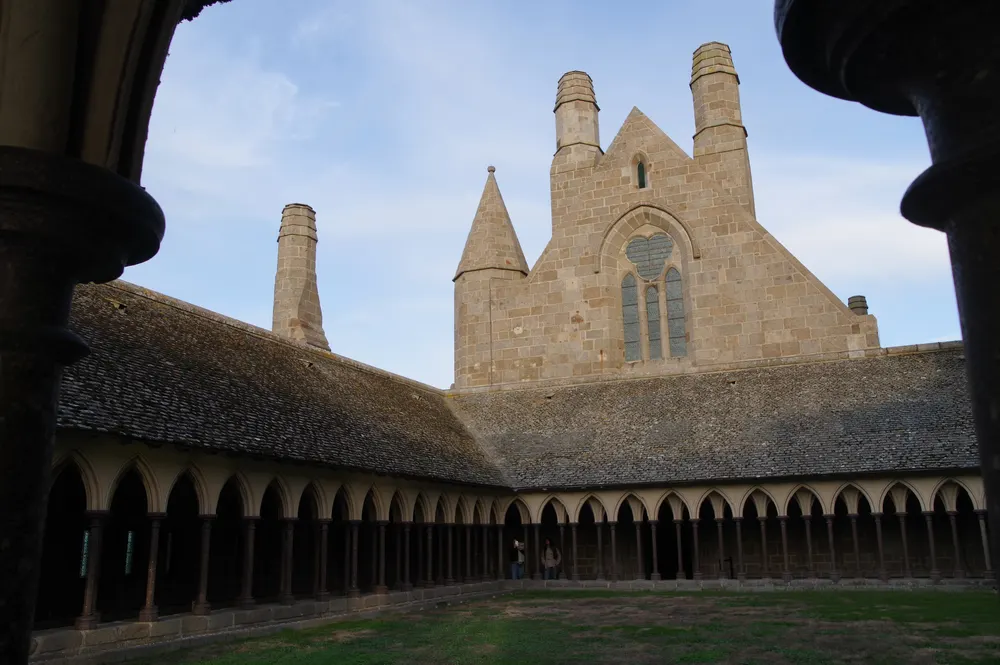
- Cloister – an early 13th-century cloister at the top of La Merveille, hanging between sky and sea, with a double row of slender staggered columns and a small garden.
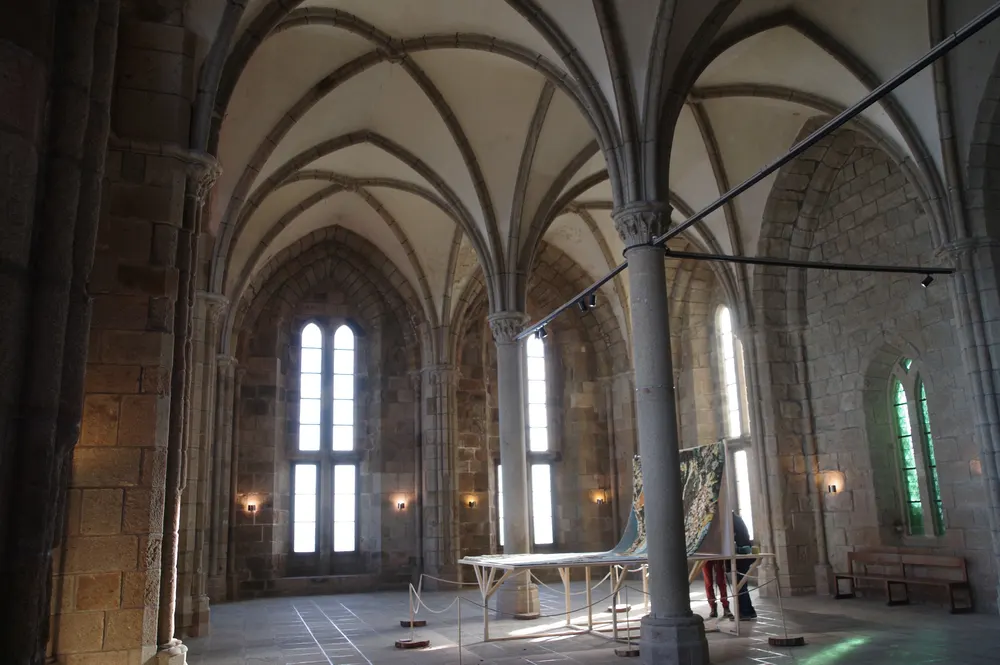
- Refectory – the monks' dining hall, flooded with light from tall narrow windows set deep in the walls; monks ate in silence while one read from a pulpit.
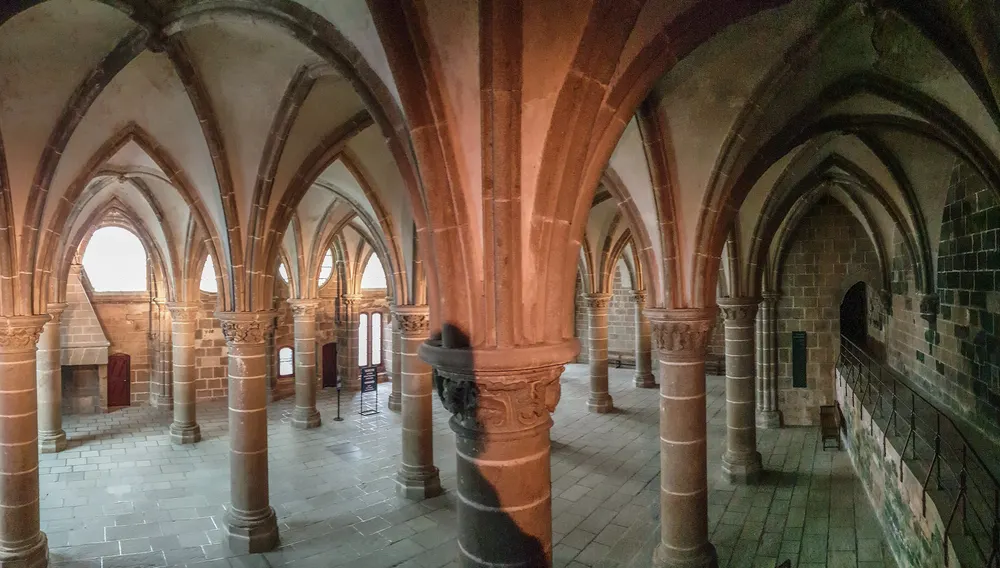
- Guests' Hall (Salle des Hôtes) – directly below, an elegant Gothic hall where the abbot received kings and nobles.
- Crypt of the Great Pillars – a mid-15th-century Gothic crypt with massive columns that carry the rebuilt choir above.
- Saint-Martin Crypt – a Romanesque crypt from shortly after the year 1000, its barrel vault spanning about nine metres.
- Treadwheel room – a large wooden wheel, installed in 1818 when the Abbey was a prison, that hoisted supplies up the cliff on a sledge; prisoners walked inside it.
- Saint-Étienne Chapel and the north–south staircase – part of the older Romanesque monastery beneath the West Terrace.
- Monks' Walkway (Promenoir) – a long two-aisled hall with early rib vaults from the 12th century.
- Knights' Hall (Salle des Chevaliers) – the great Gothic hall of La Merveille, used as the monks' scriptorium and workroom; the Abbey's surviving medieval manuscripts are now in Avranches.
- Almonry and cellar – the lowest level of La Merveille, where the poor and pilgrims were welcomed; the old storeroom now holds the bookshop and gift shop, and you leave through the north gardens.
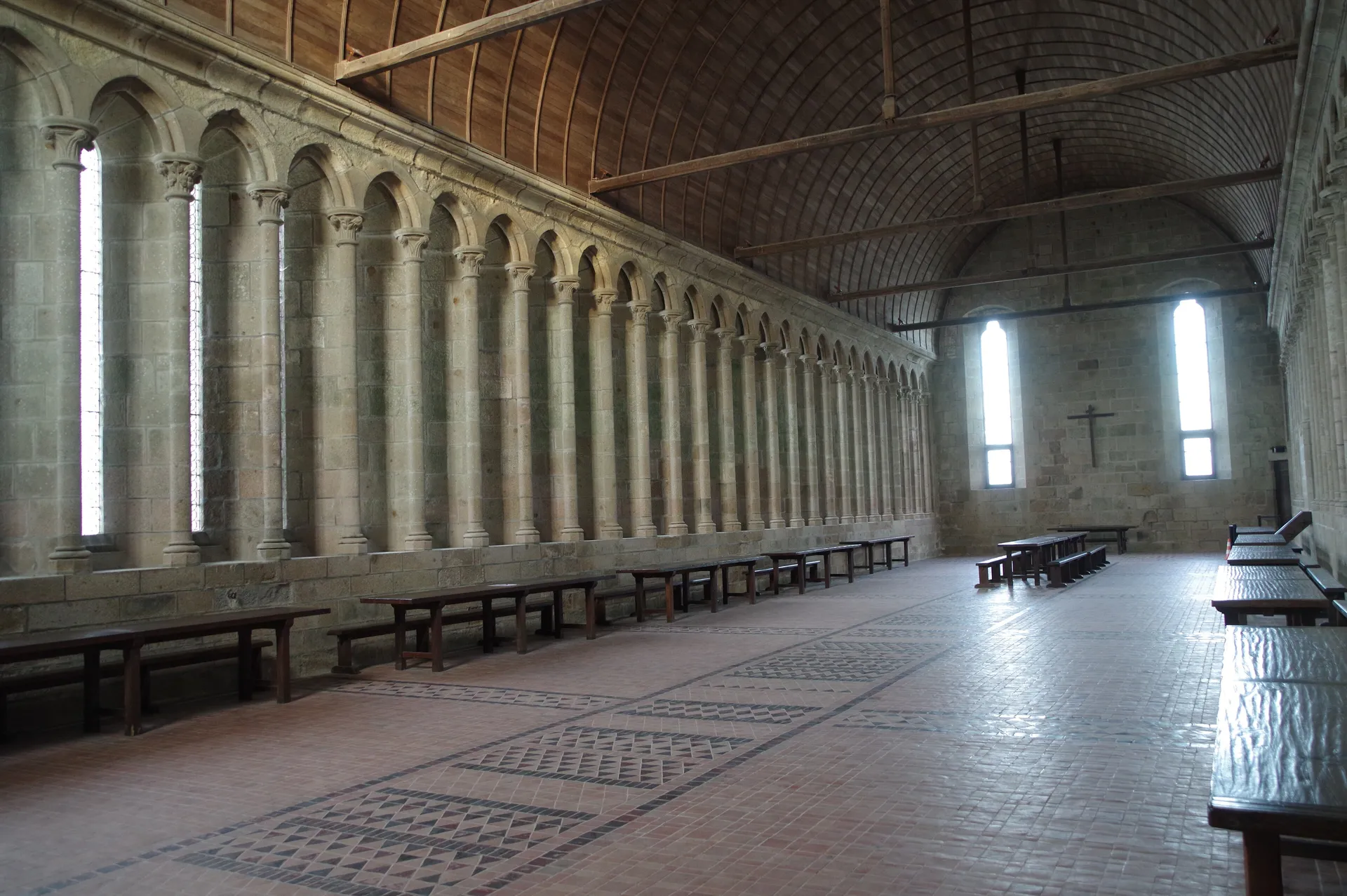
The refectory: light pours in through tall, narrow windows set deep in the walls.
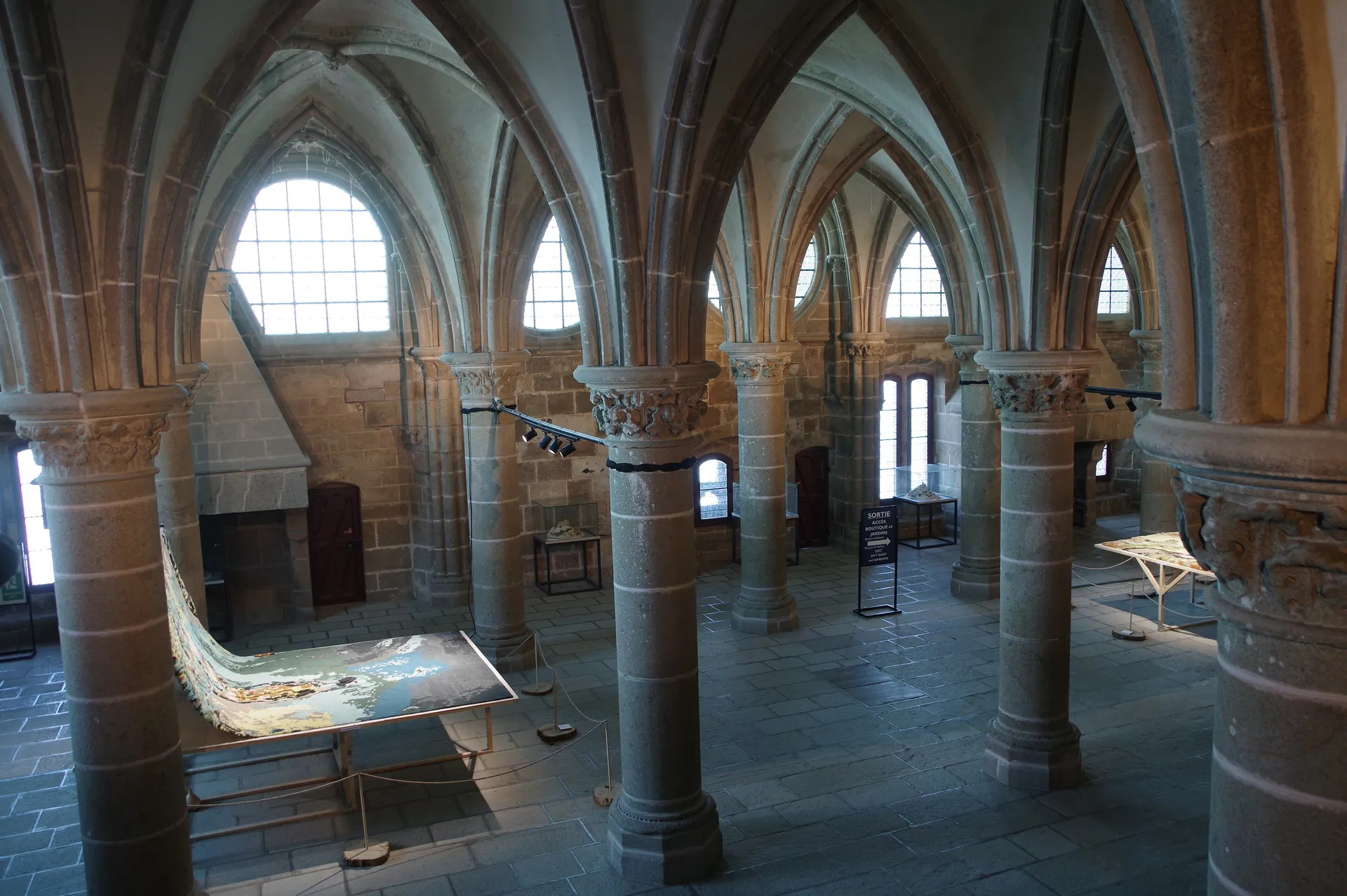
La Merveille, the Gothic masterpiece
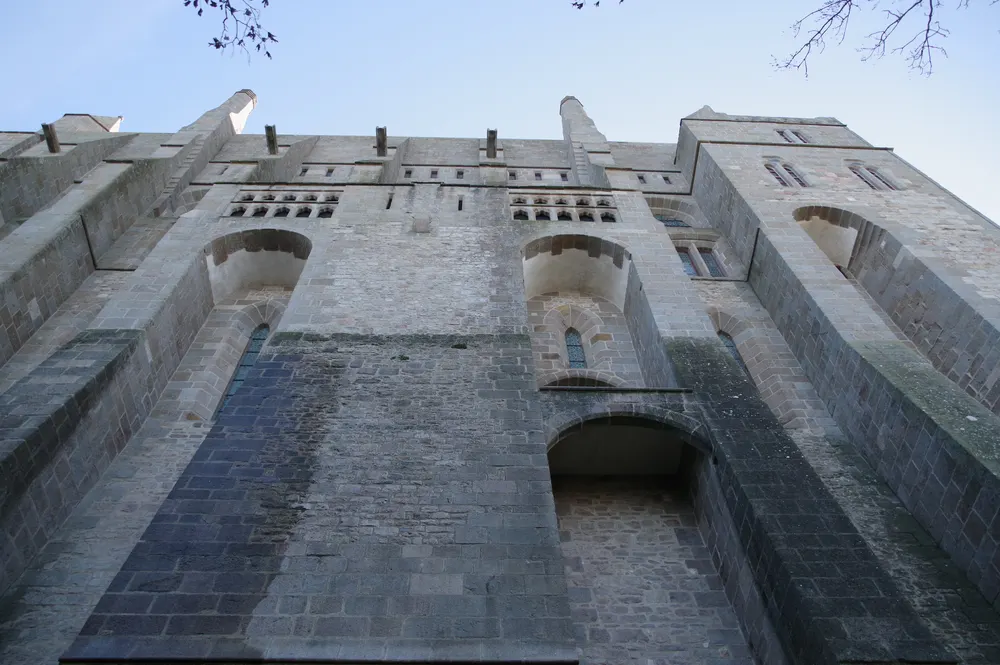
La Merveille is the reason architects make the trip. Built mainly in the first decades of the 13th century, after a fire in 1204 damaged the monastery, it is a pair of three-storey buildings set against the steep north side of the rock. The design is hierarchical: the poor and pilgrims on the bottom floor (almonry), nobles and guests in the middle (Guests' Hall), and the monks at the top, closest to heaven (refectory and cloister). The western block repeats the pattern with the cellar, the Knights' Hall and the cloister.
Seen from outside, from the north ramparts or from the sands at low tide, La Merveille is a sheer wall of granite and buttresses that seems to grow out of the rock. Inside, notice how the halls get lighter and more delicate as you rise: thick columns below, slender colonnettes and wide windows above, because the lower floors carry the weight of everything above them.
How to visit: self-guided, tablet, guided tour or audio guide
Self-guided with the free leaflet is how most people visit; it takes 45 minutes to an hour and a half. The Revelacio tablet (€6 on top of the ticket, your ID card is kept as a deposit) adds augmented-reality reconstructions on three routes: a 45-minute Discovery tour, a 1½-hour Exploration tour and a children's tour.
The CMN also runs an included commented tour of about one hour in French or English (book online or sign up on arrival, subject to availability) and a two-hour conference visit led by a monument guide that enters rooms normally closed to the public; it costs €24 from April to September and €20.50 from October to March (as of November 2026), with a maximum of 30 people and online booking required.
On GetYourGuide you can book the Abbey entry ticket, a ticket with an audio tour for your phone, a smartphone audio tour on its own, a two-hour village and Abbey walk with a certified guide (entry not included) or a private guided tour with Abbey entrance. Compare them on our tours page.
Mont-Saint-Michel Abbey entry ticket
Your ticket to the Abbey's full visitor route – church, cloister, refectory and La Merveille – with the voucher on your phone.
Check availabilityBook via GetYourGuide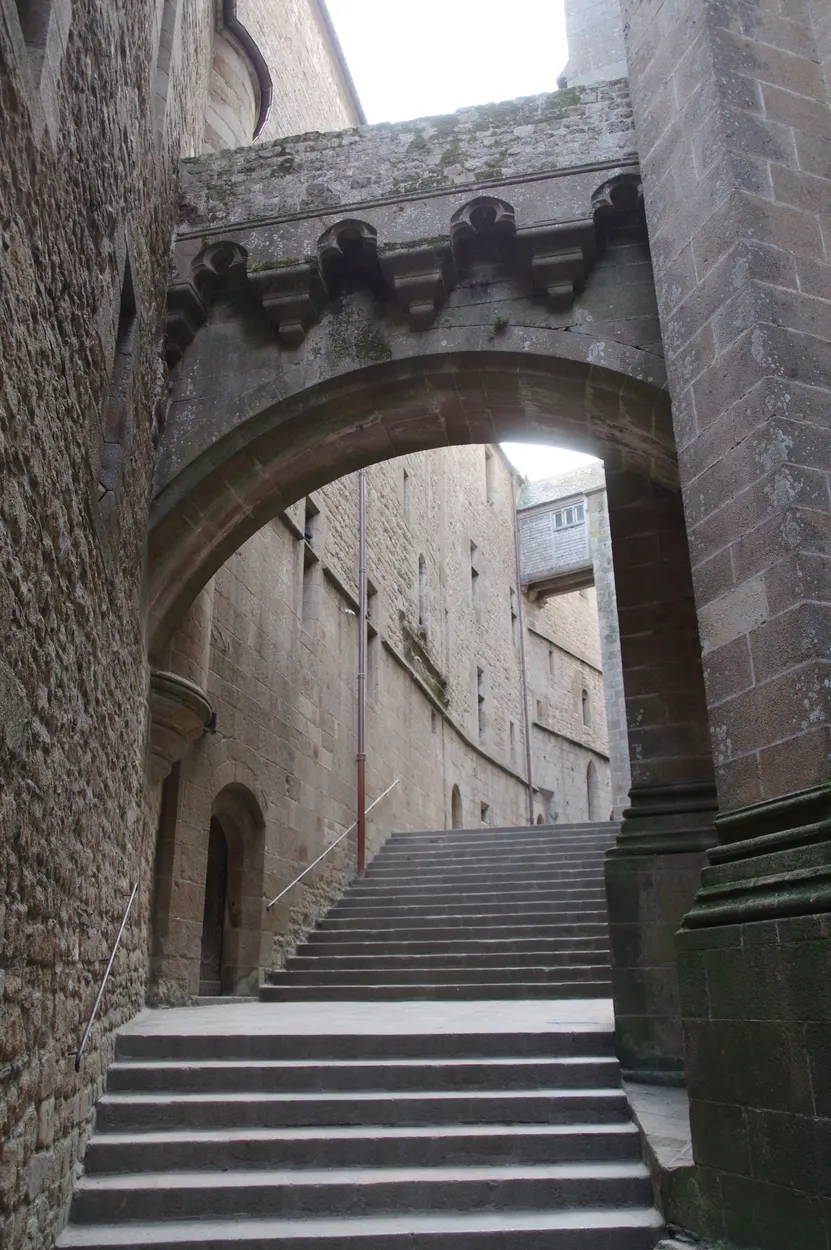
Abbey ticket with audio tour
Abbey entry plus a self-guided audio commentary on your own phone, so you can explore at your own pace.
Check availabilityBook via GetYourGuide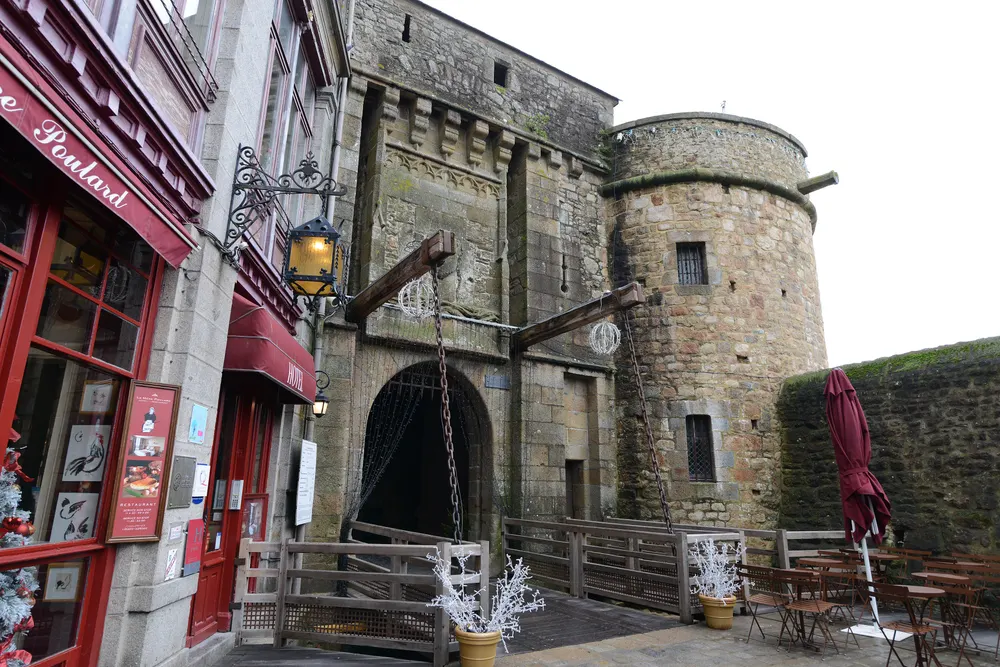
Village and Abbey tour with a certified guide
A two-hour small-group walk through the village and the Abbey with a certified local guide; Abbey admission is paid separately.
Check availabilityBook via GetYourGuide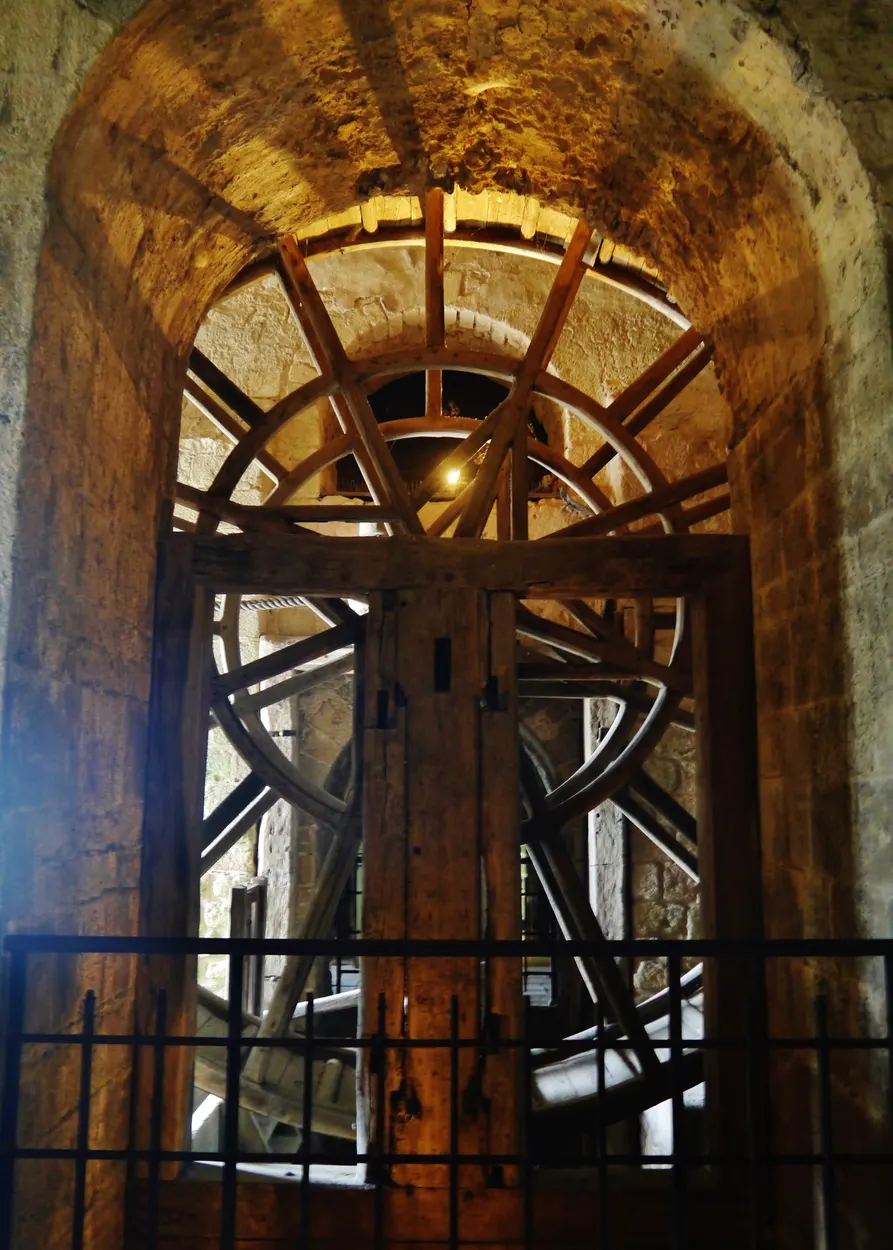
Private guided tour with Abbey entrance
A private guide for the village and the Abbey, with the entry ticket included – ideal for families and small groups.
Check availabilityBook via GetYourGuideTour listings are on GetYourGuide. Prices, times and cancellation terms are shown live on each listing and can change; MontSaintMichel.com may earn a commission at no extra cost to you.
Best time of day and year
The Mont is busiest between about 11:00 AM and 4:00 PM, when coach groups and day-trippers overlap. Be at the Abbey for opening (9:00 AM from May to August, 9:30 AM the rest of the year) or arrive for the last two hours before last entry. Staying overnight on the Mont or at La Caserne makes both easy – see where to stay.
July and August bring the longest hours and the biggest crowds, and on summer evenings the Abbey has historically opened for night visits with music and lighting; dates and prices are published each year on the official agenda. From November to March the monument is quiet, cheaper (€13) and free on the first Sunday of the month (January, February, March, November and December). Plan around both crowds and tides with our seasons guide and tide table.
Weather matters more than you think: parts of the route are outdoors (West Terrace, cloister, gardens), and the CMN may close some outdoor areas in storms. A grey day with a high tide can be more atmospheric than a blue-sky Saturday in August.
Rules, bags and accessibility
- Bags: suitcases and large bags are refused; bags smaller than airline cabin size are accepted. The Abbey has no left-luggage service. Use the paid lockers at the mainland tourist information centre or leave bags in your car or hotel.
- Security: expect a visual bag check at the entrance. Knives and scooters are not allowed.
- Pets: not allowed, even in a carrier; guide and assistance dogs are welcome.
- Children: under-18s go free with their family; minors must be with an adult. Pushchairs must be folded inside.
- Food: no eating or smoking in the monument. Eat before or after – see food for the best options on and off the Mont.
- Toilets: free toilets with baby-changing at the start and midway through the route.
- Mobility: many steps, no lift; the CMN advises that the visit requires good physical condition. Holders of the French disability mobility card (CMI) and one companion enter free.
Mass and the monastic community: times and etiquette
Since 2001 the Abbey has been home to the Fraternités monastiques de Jérusalem, a community of monks and nuns who keep a cycle of prayer in the abbey church. Their services are open to anyone who wishes to pray; they are not guided tours, and the community asks visitors to treat them as worship.
The community's published timetable (November 2026):
- Lauds (morning prayer)
- Tuesday–Sunday, 8:00 AM
- Mass
- Tuesday–Saturday 12:15 PM · Sunday 11:30 AM
- Vespers (evening prayer)
- Tuesday–Saturday, 5:30 PM
- No services
- Monday (the communities' day of solitude) and Sunday evening
- Meeting point
- Parvis de la Croix de Jérusalem, at the top of the Grande Rue, 15 minutes before
- Adoration
- Thursday 8:00 PM–9:15 PM in the Saint-Pierre parish church (open access)
Make it a full day
After the Abbey, walk the ramparts and village, see the Saint-Pierre parish church with its statue of Joan of Arc, and eat the famous puffed omelette or salt-meadow lamb (food). If the tides are high, watch the water fill the bay from the ramparts or the bridge; at low tide, join a certified guide for a barefoot walk on the sands.
For the history behind the stones – Bishop Aubert, the Hundred Years' War siege, the prison years and the 1897 golden archangel – read our history of Mont-Saint-Michel.
Frequently asked questions
How much is the Mont-Saint-Michel Abbey ticket?
As of November 2026, a full-price individual ticket costs €13 from 1 October 2026 to 31 March 2027. The 2026 high-season price (1 April–30 September 2026) was €16; summer 2027 prices had not yet been published. Under-18s with their family enter free, as do 18–25s who are EU nationals or non-EU regular residents of France. See Abbey tickets.
Do I need to book the Abbey in advance?
It is not compulsory for individuals, but it is strongly recommended from spring to autumn, at weekends and in school holidays, when queues at the entrance can be long. Groups of 10 or more must book.
How long does it take to visit the Abbey?
About 45 minutes to 1½ hours inside, plus 45–60 minutes from the mainland car parks to the entrance. With the village, ramparts and lunch, plan half a day.
Is the village free?
Yes. The village streets, the ramparts and the Saint-Pierre church are free and open at all hours; only the Abbey and the small private museums charge.
Can I visit the Abbey with a wheelchair or pushchair?
The CMN says the site is very difficult for people with reduced mobility: there are many steps and no lift. Pushchairs must be folded. Contact the monument in advance to discuss specific needs.
Is the Abbey open in the evening?
Regular opening ends at 7:00 PM in summer and 6:00 PM the rest of the year. In some summers the CMN runs evening openings and night visits; dates are published on the Abbey's official agenda.
Is there a dress code or mass?
There is no dress code beyond respect in a working church. The monastic community holds daily services in the abbey church; check the Fraternités de Jérusalem's times if you wish to attend.
What time is Mass at Mont-Saint-Michel Abbey?
12:15 PM from Tuesday to Saturday and 11:30 AM on Sunday (community timetable, November 2026), with Lauds at 8:00 AM from Tuesday to Sunday and Vespers at 5:30 PM from Tuesday to Saturday. No services on Mondays or on Sunday evening. Meet 15 minutes before at the Parvis de la Croix de Jérusalem at the top of the Grande Rue.
Why is the Abbey of Mont-Saint-Michel important?
It has been a pilgrimage site since 708 and a Benedictine abbey since 966; it combines a Romanesque church with the Gothic Merveille; its monks produced manuscripts now kept in Avranches; it never fell to the English in the Hundred Years' War; and it is part of a UNESCO World Heritage site (1979). Monks and nuns still pray there today.
How old is the Abbey of Mont-Saint-Michel?
The sanctuary dates from 708–709, so it is more than 1,300 years old. Benedictine monks arrived in 966, the abbey church was begun in 1023, and La Merveille was built in the early 13th century.
Is the Abbey hard to visit in a summer heatwave?
It can be tiring: the walk up from the car parks and the climb to the Abbey are steep, and the bridge has almost no shade. In hot weather, book the first slot of the day (9:00 AM from May to August) or the late afternoon, carry water and a hat, and use the free shuttle rather than walking the bridge at midday. Check the official site on the day for any changes to opening.
Sources and official information
Facts were checked against these official sources in November 2026. Opening hours, prices and timetables change, so confirm before you go.
- abbaye-mont-saint-michel.fr
- abbaye-mont-saint-michel.fr
- abbaye-mont-saint-michel.fr
- abbaye-mont-saint-michel.fr
- ot-montsaintmichel.com
- whc.unesco.org
- abbaye-montsaintmichel.com
- abbaye-montsaintmichel.com
- tourmag.com
MontSaintMichel.com is an independent guide, not the official site of the Abbey or of the Mont. Some links are affiliate links: tours and tickets go to GetYourGuide and hotels go to Booking.com, and we may earn a commission at no extra cost to you.